

The NJ E-Bike Law: Day 38 (Part 1) – California’s Smarter Approach to E-Motos
Share
Today marks Day 38 since the New Jersey e-bike law was signed.
In this update, I want to highlight something happening in California that New Jersey should be paying attention to.
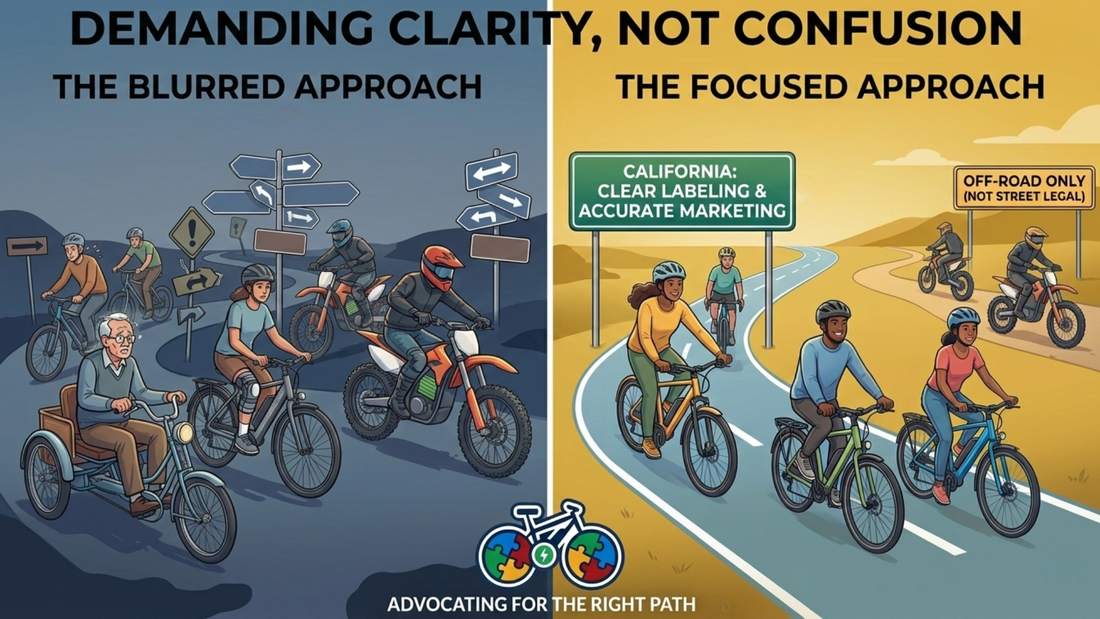
California is moving in a completely different direction, and it is a better approach because it targets the real problem without punishing the wrong people.
California Is Targeting False Marketing
New legislation in California aims to clamp down on false marketing of e-bikes.
They are not collapsing all classes of bikes into one category like New Jersey did. Instead, they are coming at this from a marketing and labeling angle.
The focus is simple: if a bike is really an e-moto or an off-road vehicle, it needs to be sold and labeled that way in marketing materials, and clearly presented as not street legal.
This matters because it is not being done consistently right now, and consumers deserve clarity.
E-Bikes vs. E-Motos: The Difference Matters
E-bikes have defined limits on speed and power. E-motos do not.
That distinction is critical, and California is working to make sure the public understands the difference instead of blurring the lines.
I have been working with PeopleForBikes and others who helped California put this bill together. The same people who drafted that legislation are also part of the team we are working with here.
They know this issue inside and out.
The Real Problem Is Not Disabled Riders
The real problem is not disabled people riding trikes or elderly riders on Class 1 e-bikes.
The problem is e-motos and the riders of them, especially when they are being marketed and sold in ways that make them seem like they are street-legal e-bikes.
New Jersey already had laws that could have addressed bad behavior. The issue was enforcement.
Instead, the NJ e-bike law created immediate barriers for disabled riders, and that is unacceptable.
It punished disabled riders and other responsible riders for the behavior of e-moto users.
A Simple Visual Clue
Let’s be clear: e-motos do not look like e-bikes.
Many have dirt bike tires, huge batteries, and a dirt bike profile. They look like off-road machines, because that is what they are.
That visual indicator is often the first clue that we are not talking about a regulated, class-defined e-bike.
California’s approach focuses where it should: on accurate labeling, honest marketing, and clear consumer understanding.
📂 This update is part of our ongoing NJ E-Bike Law series.
Follow all updates here:
NJ E-Bike Law Playlist on YouTube
📺 Watch the full Day 38 (Part 1) update here:
 Shrewsbury, NJ
 855-88JESSE (855-885-3773)
 hello@jesseserides.com
